
Fraud protection before settlement
Fraud protection before settlement — with policy fully in your hands. PGTAIL evaluates every proposed transaction before funds move. You set the rules. The engine holds the line.
OnChain Sentinel is a policy-governed protection API — not a wallet, exchange, or custodian. PGTAIL evaluates every proposed transaction against 60+ behavioral and pattern-based threat guards before funds leave your wallet. Policy is fully yours: configure postures from Standard to Zero-Trust, deploy to the engine, and receive structured decisions — allow, warn, hold, or block — with a full audit log.
- 60+ active threat guards: behavioral detection, registry enforcement, approval control, network safety
- Policy postures from Standard to Zero-Trust — or fully custom with per-guard control
- Decisions are structured and auditable: allow, warn, hold, or block — always explainable
- Forensic-ready logs: every decision is signed, timestamped, and reviewable
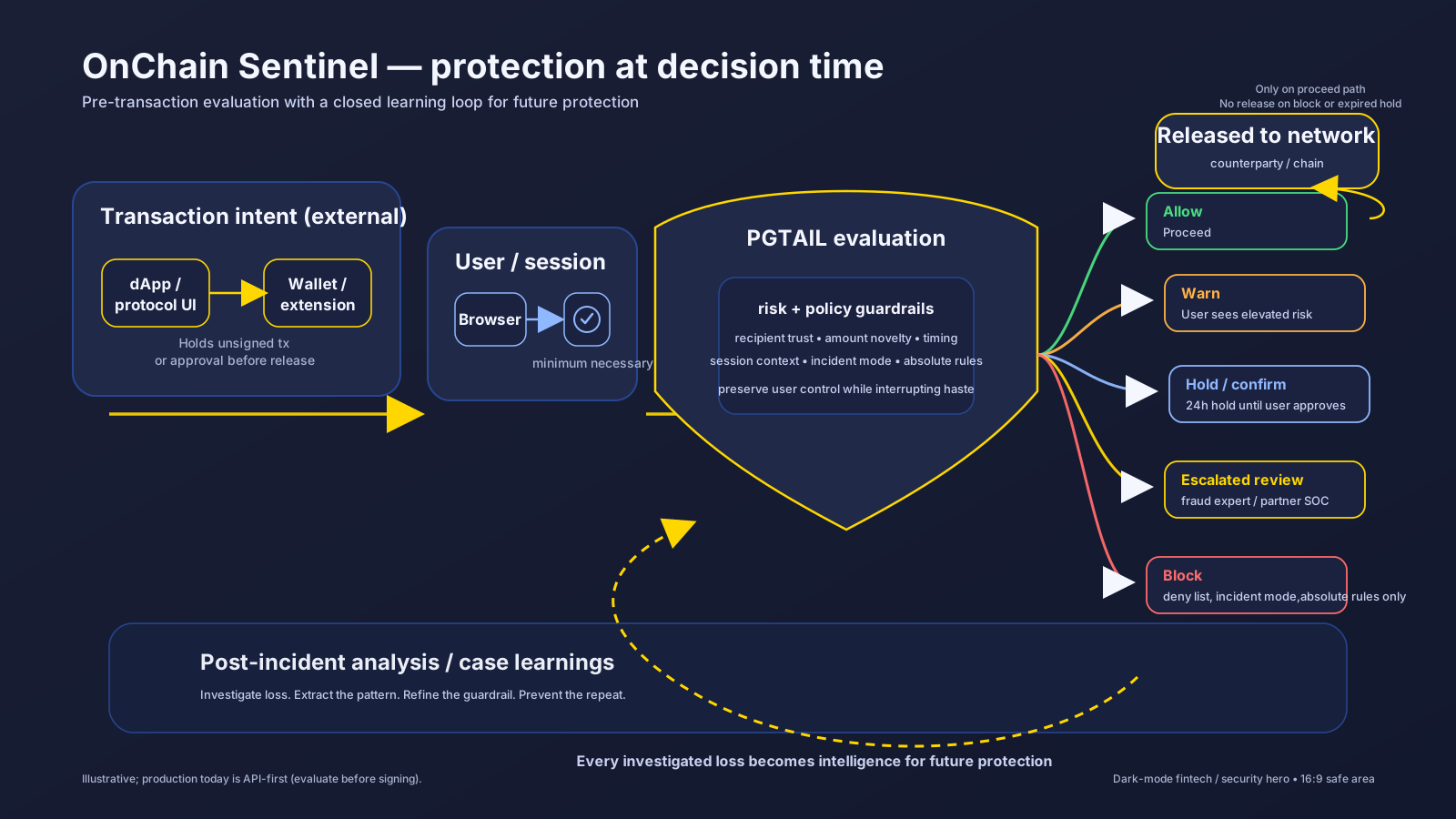
A closed protection loop
OCS is built as a complete ecosystem: the prevention engine is live today. Forensics — case intake, pattern extraction, and evidence packaging — is the next milestone. The loop closes when investigations feed directly back into prevention policy.
Prevention — live today
PGTAIL evaluates 60+ threat signals before any transaction settles. Policy is configurable, deployed, and auditable.
Forensics — Phase 2
Structured case intake, transaction graph analysis, and evidence packaging formatted for law enforcement, insurance, and compliance teams.
Institutional integration — Phase 3
Exchanges and custody providers call the PGTAIL API before signing any transaction. The same engine, at institutional scale.
Protect before settlement. Investigate what got through. Close the loop.
Why policy-native protection matters
Before settlement, not after excuses
Most fraud help arrives post-loss. PGTAIL is built to interpose at decision time: structured evaluation, policy gates, and room for expert escalation when stakes are high.
User sovereignty, bounded safety
The goal is not to replace the user’s authority—it is to protect their authority from haste, deception, and hidden risk. Holds and warnings come before blunt blocks except for clear deny-list or policy boundaries.
Evidence-minded by design
Analyst-facing workflows can produce standardized packages for trusted partners; investigators’ internal case closure stays in their systems—OCS focuses on what it supplies and how prevention improves over time.
How protection shows up at transaction time
Define policy & trust
Organizations and users set protection profiles: lists, limits, incident posture, and when to require confirmation, hold, or expert review.
Propose the action
A wallet, dApp, or bridge proposes a transfer, approval, or connection. OCS evaluates the proposed action—not just a static score—in context.
PGTAIL decision ladder
The engine returns a structured decision: allow, warn, time-bounded hold, or block — only when policy demands. Every decision is logged with full context for audit and review.
Preview: Policy configurator
Protection profile: 0x...F2a4
ACTIVE / ENGINE ENFORCEDAddress Lock (B2)
Only approved addresses can receive transfers.
Daily Velocity Limit (E1)
Max outflow: 5 ETH per 24 hours.
High-Value Multi-Sig (B6)
Transfers > $50,000 require 2-of-3 co-signers.
Stay close to the roadmap
Join the list for testnet, pilot, and product updates—we’ll only send what’s useful.